HacknPlan vs Trello
Simple boards are great. Shipping games needs more.
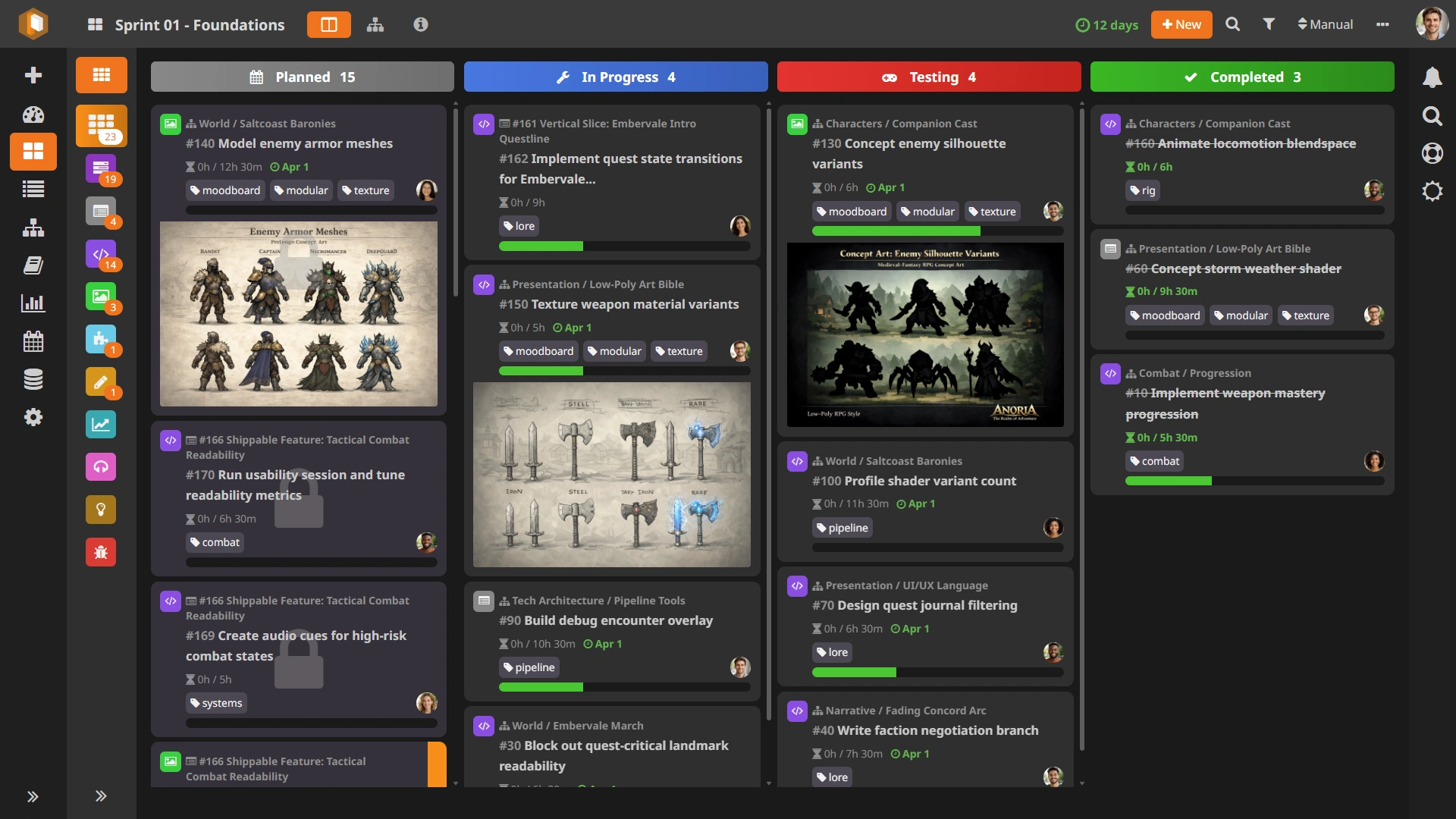
Trello keeps work lightweight. HacknPlan keeps it lightweight and adds game-specific planning clarity, so your team can scale from early prototype to release without workflow chaos.
What teams usually gain after switching
Better cross-discipline visibility
Clearer release planning signals
Less producer overhead each week
Why teams outgrow Trello
The pain appears when deadlines and dependencies collide
Great cards, limited production depth
Trello is fast for simple task tracking, but game teams usually need stronger milestone and dependency visibility.
Design and execution drift apart
When design intent lives outside the daily workflow, teams lose context and spend more time clarifying decisions.
Leads end up filling process gaps
Without built-in planning signals, producers rely on extra meetings, docs, and manual follow-ups to stay on track.
Why HacknPlan fits better
A game production workflow with less friction
Purpose-built for game teams
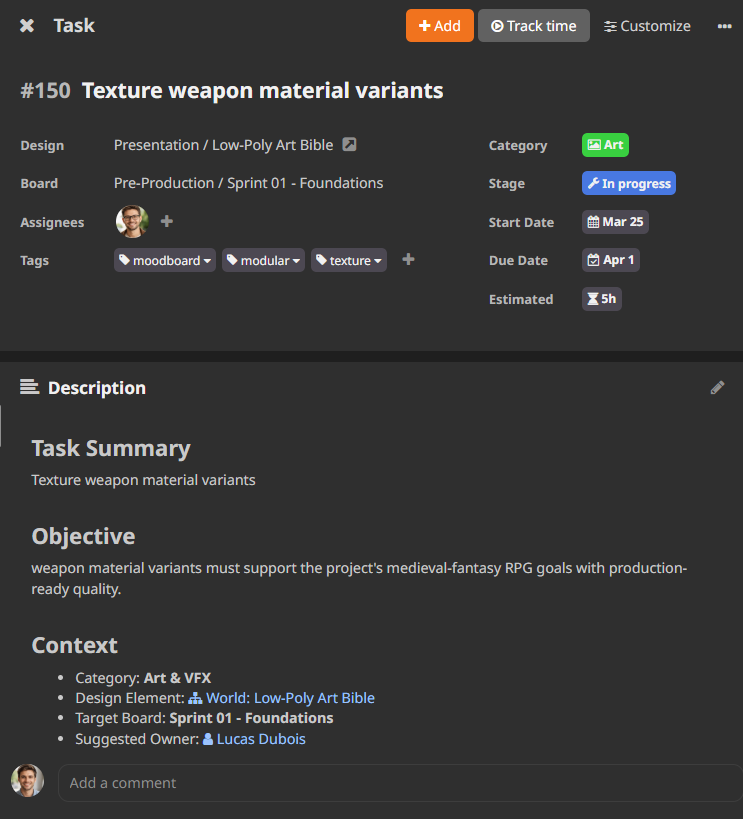
Design context, tasks, and production planning stay connected from prototype to launch.
Planning depth without enterprise bloat
Milestones, dependencies, burndown, and Gantt views are available without heavy setup.
One workflow for every discipline
Design, art, programming, and QA get clear role-aware views inside one shared production system.
At a glance
HacknPlan vs Trello for teams that plan to ship
Trello keeps collaboration lightweight. HacknPlan keeps collaboration lightweight and adds the production depth indie studios need when scope, risk, and release pressure increase.
| Capability | Trello | HacknPlan | What this means for you |
|---|---|---|---|
| Daily workflow | Simple card-based boards | Game-ready boards with production structure | HacknPlan keeps Trello-level usability while adding the rigor teams need to ship. |
| Design-to-task alignment | Usually handled with separate docs/tools | Integrated Game Design Model linked to tasks | HacknPlan reduces context switching and keeps execution tied to game intent. |
| Milestone confidence | Possible with manual setup and conventions | Native milestones, dependencies, burndown and Gantt planning | HacknPlan gives producers clearer signals for release planning decisions. |
| Cross-discipline coordination | Flexible but generic | Built around real game team roles and categories | HacknPlan helps smaller teams stay aligned as scope and team size grow. |
| Scale for serious indie teams | Excellent for lightweight workflows | Focused planning stack for teams shipping commercial games | Trello is great to start; HacknPlan is better when production pressure rises. |
Expected outcome
What changes after switching to HacknPlan
Keep Trello simplicity, add game-team clarity
If Trello helped you get started, HacknPlan helps you finish stronger with clearer planning, better production visibility, and less process overhead.