Dedicated workflows per discipline
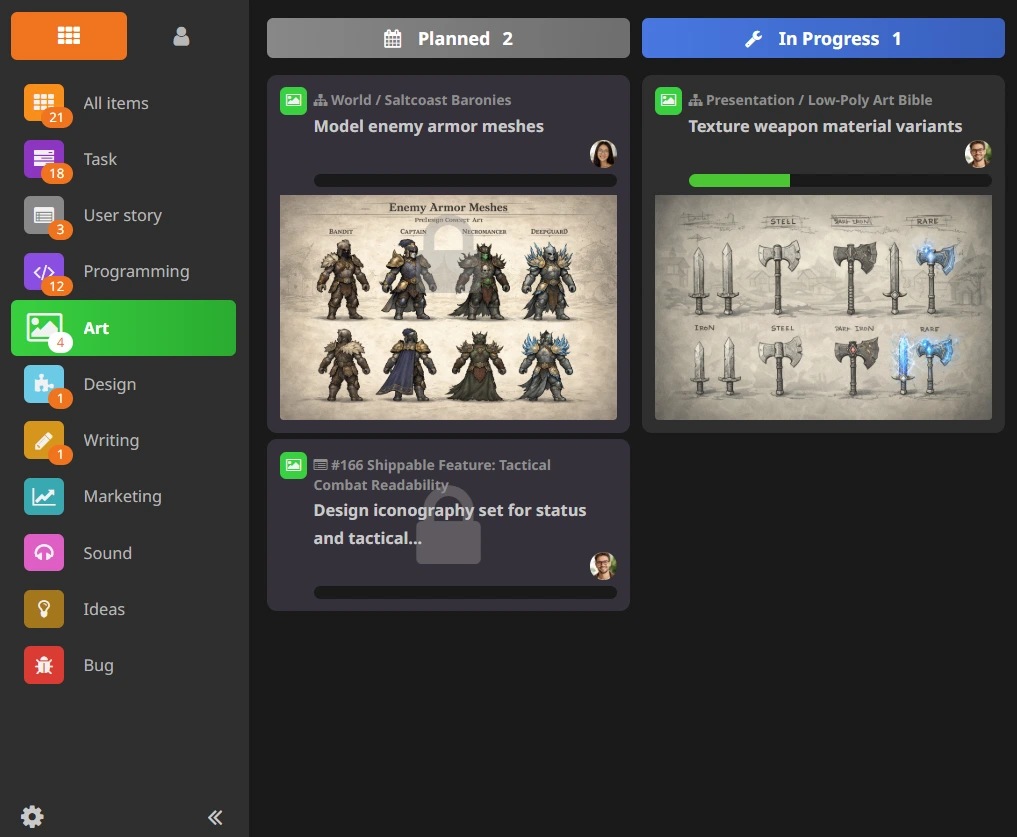
Set up independent lanes for art, code, design, and production so each team can use the right level of granularity, estimation style, and status definitions without compromising visibility for leadership.
Feature deep dive
Give every craft its own clear execution lane while production keeps a single source of truth for scope, ownership, and release timing. HacknPlan boards are designed for game production reality, where artists, programmers, designers, QA, and producers all move at different speeds but still need synchronized outcomes.
Set up independent lanes for art, code, design, and production so each team can use the right level of granularity, estimation style, and status definitions without compromising visibility for leadership.
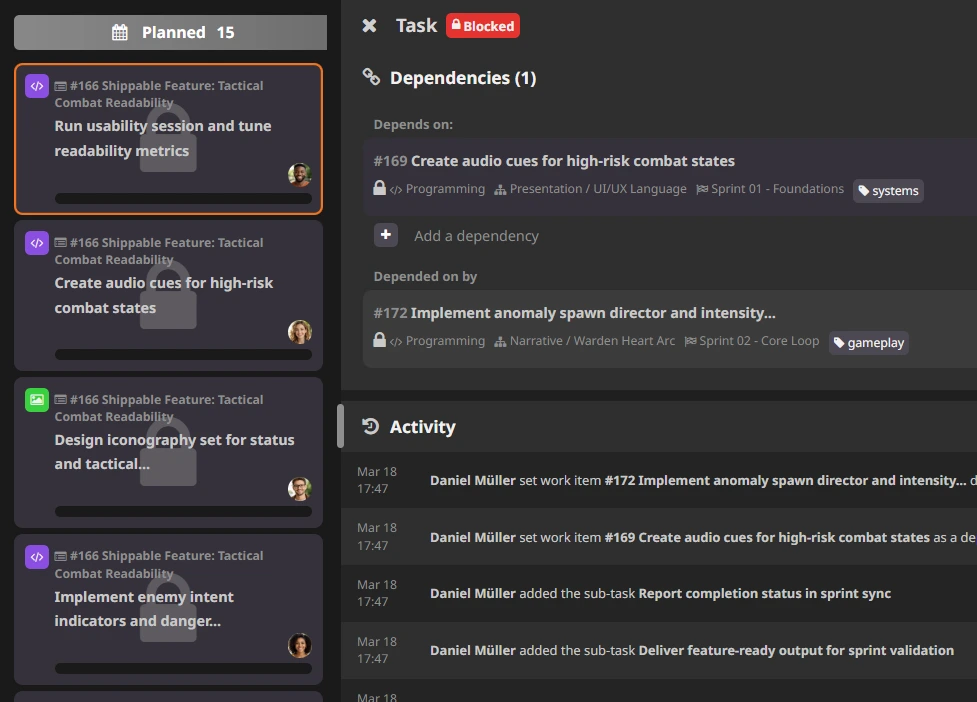
Link tasks and stories between boards to expose blockers early. Teams understand what they are waiting on, producers can prioritize unblocking work, and sprint commitments become more realistic.
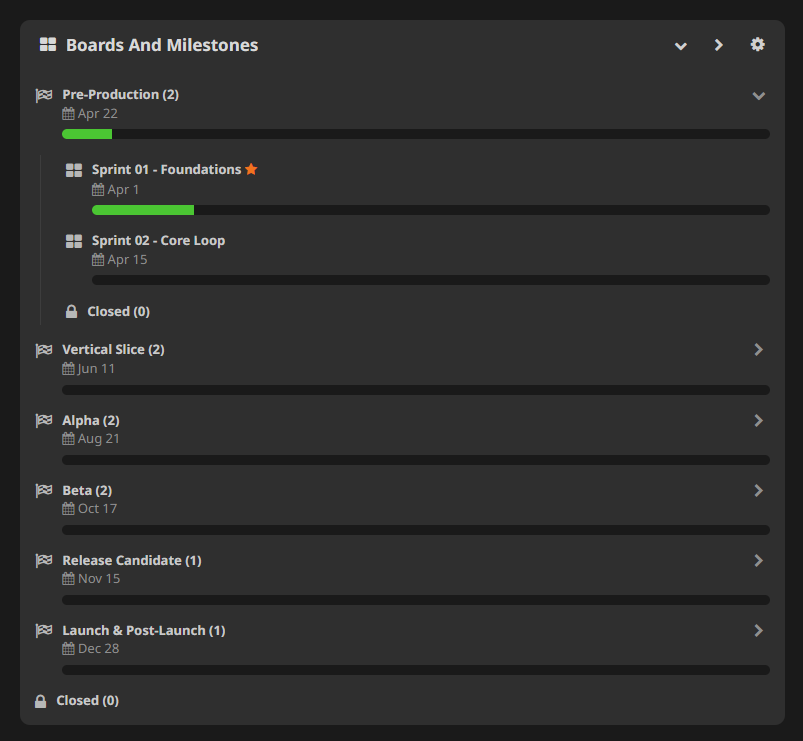
Tie board work directly to milestones and delivery targets. This keeps daily execution connected to business outcomes instead of letting tactical activity drift away from launch priorities.
Fewer hidden blockers between disciplines
Higher predictability for sprint and milestone delivery
Clear ownership across every production phase
Most project tools force one workflow on every role, which creates friction immediately: art pipelines become too rigid, engineering tickets become too shallow, and production loses confidence in progress signals. With HacknPlan, each discipline can model how work actually happens while still reporting into one production system. That means less process negotiation and more shipping.
Team leads can preserve autonomy inside their boards while producers and directors still get a unified view of status, workload, and risk. This prevents painful status meetings where teams spend time translating workflow differences instead of solving delivery problems.
Scope moves. Features get cut, milestones shift, and dependencies appear unexpectedly. Because boards are connected with ownership, impact, and dependency data, your team can replan quickly and confidently instead of relying on ad hoc spreadsheets or fragmented chat threads.
Move your team from disconnected boards and manual status rollups to a coordinated execution system designed for complex game development timelines.
Feature deep dive
Give every craft its own clear execution lane while production keeps a single source of truth for scope, ownership, and release timing. HacknPlan boards are designed for game production reality, where artists, programmers, designers, QA, and producers all move at different speeds but still need synchronized outcomes.
Set up independent lanes for art, code, design, and production so each team can use the right level of granularity, estimation style, and status definitions without compromising visibility for leadership.
Link tasks and stories between boards to expose blockers early. Teams understand what they are waiting on, producers can prioritize unblocking work, and sprint commitments become more realistic.
Tie board work directly to milestones and delivery targets. This keeps daily execution connected to business outcomes instead of letting tactical activity drift away from launch priorities.
Fewer hidden blockers between disciplines
Higher predictability for sprint and milestone delivery
Clear ownership across every production phase
Most project tools force one workflow on every role, which creates friction immediately: art pipelines become too rigid, engineering tickets become too shallow, and production loses confidence in progress signals. With HacknPlan, each discipline can model how work actually happens while still reporting into one production system. That means less process negotiation and more shipping.
Team leads can preserve autonomy inside their boards while producers and directors still get a unified view of status, workload, and risk. This prevents painful status meetings where teams spend time translating workflow differences instead of solving delivery problems.
Scope moves. Features get cut, milestones shift, and dependencies appear unexpectedly. Because boards are connected with ownership, impact, and dependency data, your team can replan quickly and confidently instead of relying on ad hoc spreadsheets or fragmented chat threads.
Move your team from disconnected boards and manual status rollups to a coordinated execution system designed for complex game development timelines.