Design docs that stay alive during production
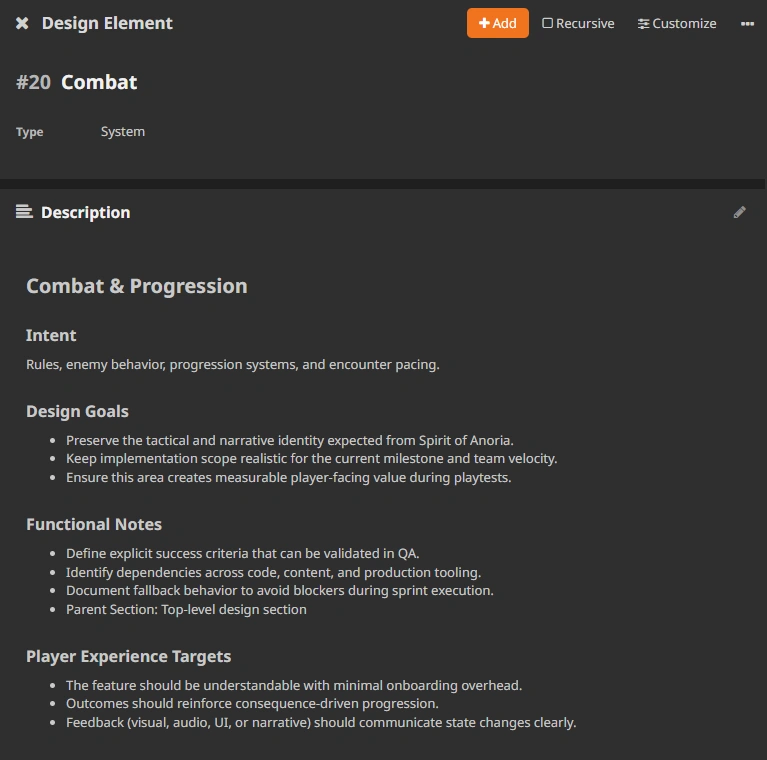
Maintain evolving design artifacts with structured content blocks and clear ownership, so design decisions remain current even as playtesting feedback and production constraints change.
Feature deep dive
Connect your game design model directly to production tasks so ideas become scoped, assignable, and trackable execution. Instead of separating design docs from implementation planning, HacknPlan keeps concept intent and delivery work side by side in one system your entire team can trust.
Maintain evolving design artifacts with structured content blocks and clear ownership, so design decisions remain current even as playtesting feedback and production constraints change.
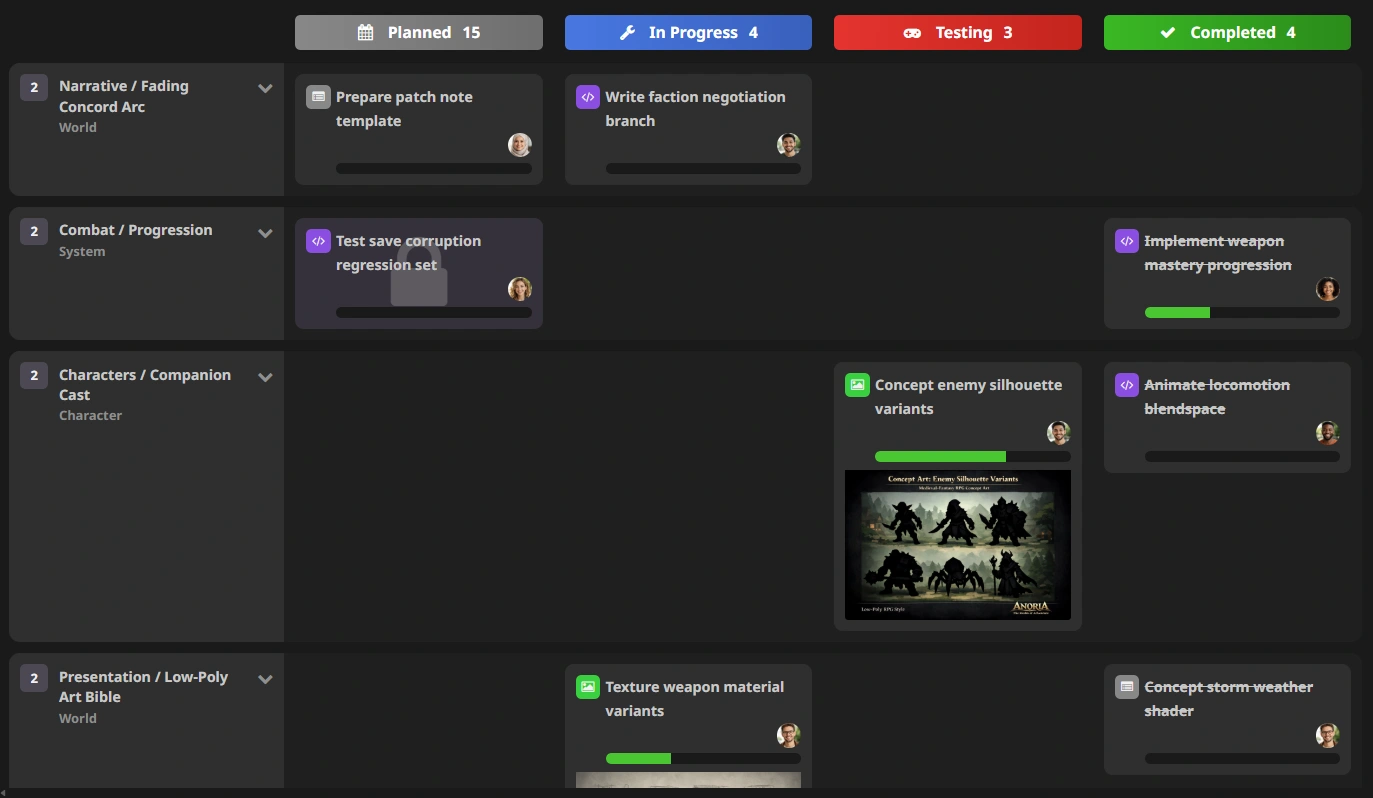
Connect mechanics, systems, and content definitions to concrete backlog items and sprint tasks. Every contributor can see not only what to build, but why it matters to the game vision.
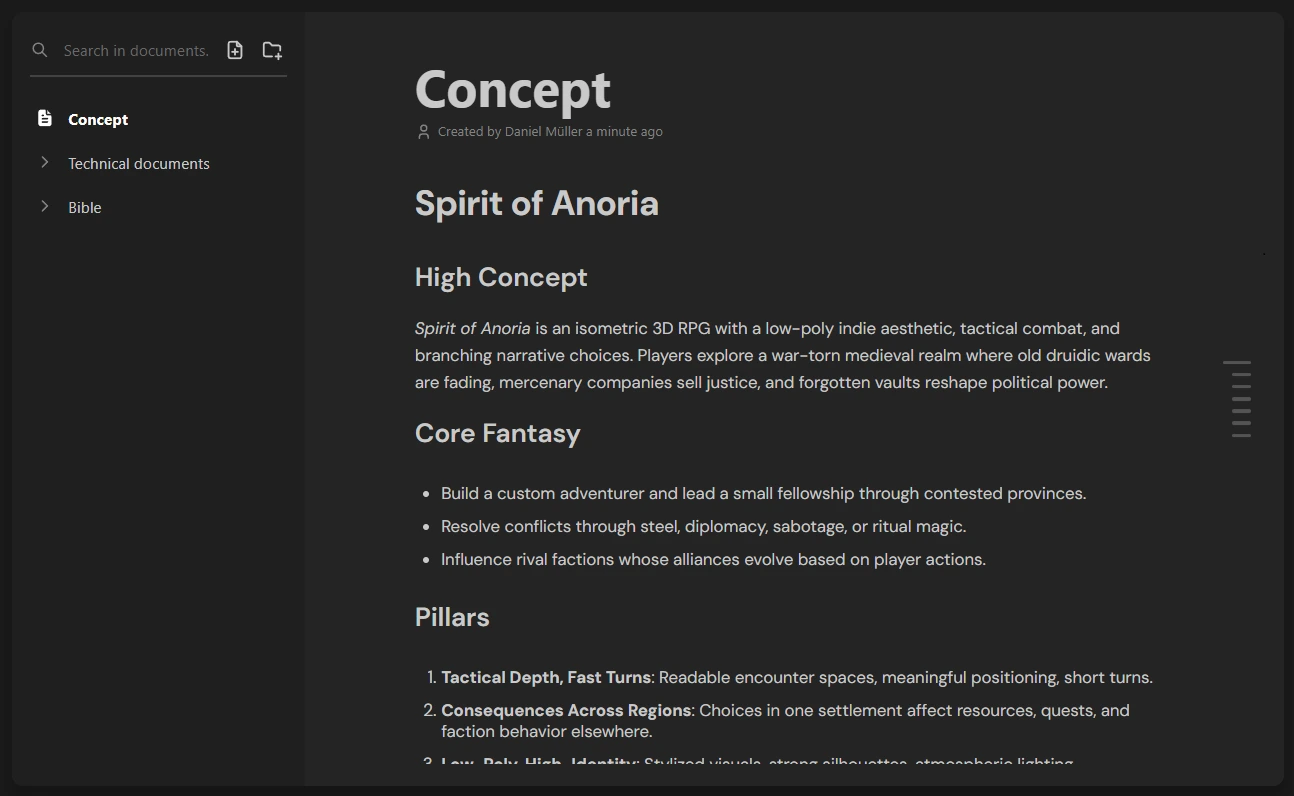
Use a block-based, realtime-collaborative editor to create rich, structured design documents that evolve with your project. This approach keeps design intent clear and actionable, reducing the risk of miscommunication and rework.
Less rework from outdated documentation
Faster onboarding for new contributors
Stronger alignment between design and production
When your GDD lives in one tool and implementation in another, drift is inevitable. Teams interpret old requirements, discussions disappear in chat, and critical design constraints are rediscovered late. HacknPlan keeps design context attached to active work so execution decisions are based on current intent, not historical snapshots.
A single feature can involve design tuning, engineering systems, UI updates, VFX, and QA scenarios. By linking every piece back to a shared design source, contributors make better local decisions while staying aligned on player experience goals.
Planning quality depends on what you can see. With explicit links between design depth and delivery tasks, producers can identify where assumptions are thin and where implementation risk is rising. That visibility supports better milestone sequencing and healthier scope control.
Bridge design and execution in one place so your team can iterate quickly without sacrificing clarity, quality, or release confidence.
Feature deep dive
Connect your game design model directly to production tasks so ideas become scoped, assignable, and trackable execution. Instead of separating design docs from implementation planning, HacknPlan keeps concept intent and delivery work side by side in one system your entire team can trust.
Maintain evolving design artifacts with structured content blocks and clear ownership, so design decisions remain current even as playtesting feedback and production constraints change.
Connect mechanics, systems, and content definitions to concrete backlog items and sprint tasks. Every contributor can see not only what to build, but why it matters to the game vision.
Use a block-based, realtime-collaborative editor to create rich, structured design documents that evolve with your project. This approach keeps design intent clear and actionable, reducing the risk of miscommunication and rework.
Less rework from outdated documentation
Faster onboarding for new contributors
Stronger alignment between design and production
When your GDD lives in one tool and implementation in another, drift is inevitable. Teams interpret old requirements, discussions disappear in chat, and critical design constraints are rediscovered late. HacknPlan keeps design context attached to active work so execution decisions are based on current intent, not historical snapshots.
A single feature can involve design tuning, engineering systems, UI updates, VFX, and QA scenarios. By linking every piece back to a shared design source, contributors make better local decisions while staying aligned on player experience goals.
Planning quality depends on what you can see. With explicit links between design depth and delivery tasks, producers can identify where assumptions are thin and where implementation risk is rising. That visibility supports better milestone sequencing and healthier scope control.
Bridge design and execution in one place so your team can iterate quickly without sacrificing clarity, quality, or release confidence.