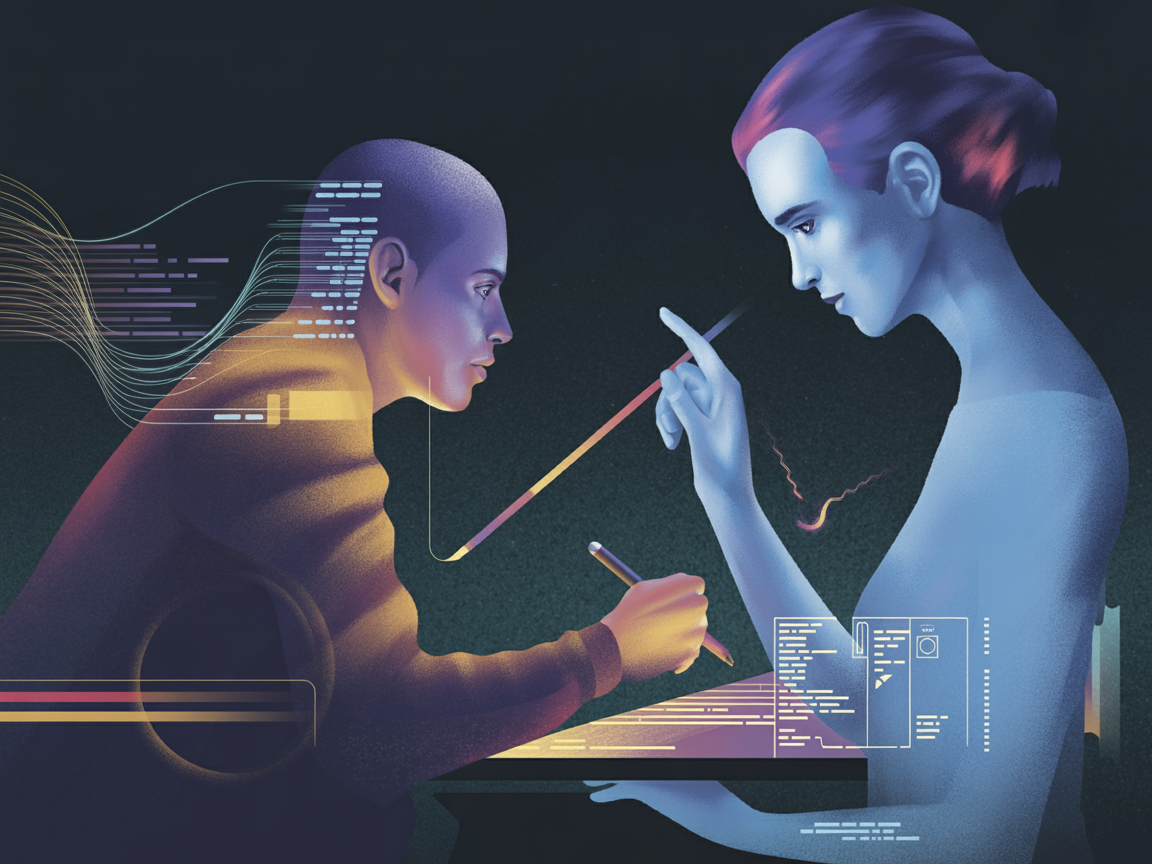
The future of AI in game development
Artificial intelligence is no longer a distant concept in the gaming industry. It is already becoming part of the everyday workflow of many studios, and its influence continues to grow.
According to the 2026 State of the Game Industry survey presented at the Game Developers Conference, around 36% of developers report actively using generative AI tools in their work, while over half say their companies are experimenting with them in production pipelines. At the same time, broader industry research suggests that more than 60% of game studios are already integrating AI into development workflows, using it for tasks such as prototyping, technical art pipelines, and production automation.
Despite ongoing debates about its role, AI has quickly become one of the most discussed topics across the industry, dominating conversations at events like GDC 2026 and shaping how studios think about the future of game production.
But the real question is not whether AI will be used.
The real question is how it should be used.
AI Should Make Developers Faster, Not Replace Them
Game development is extremely complex. Large productions involve thousands of tasks, millions of lines of code, and years of iteration.
AI can help enormously in areas like:
- Code assistance and debugging
- Automated testing and QA
- Asset pipeline automation
- Localization and content processing
- Workflow optimization
Many studios already use AI for faster prototyping and development workflows. Some reports estimate that AI-assisted pipelines can significantly accelerate tasks like level design, testing, and world-building.
This is where AI shines. It removes friction. It eliminates repetitive work. It helps developers focus on what matters most: creativity.
The Danger of Generative AI in Creative Work
Generative AI can produce images, dialogue, music, and even gameplay ideas.
But there is a fundamental limitation: AI generates patterns from the past. It predicts what is statistically likely based on existing data. That means it is excellent at producing something that looks familiar, but familiarity is not innovation.
If studios rely too heavily on AI for creative work such as art direction, narrative, or game design, the result may be games that feel increasingly similar. Predictable mechanics. Safe ideas. Familiar aesthetics. Technically impressive, but creatively empty.
Games become memorable when someone takes a risk. When a designer experiments with something strange, personal, or unexpected.
AI cannot invent that kind of creative leap.
AI Does Not Understand Fun
AI can generate systems. It can analyze data. It can even simulate player behavior.
But one thing it cannot truly understand is how a game feels.
Fun is not a formula. It comes from intuition, experience, emotion, and sometimes pure creative instinct. A designer senses when a mechanic clicks, when a level flows well, or when a moment creates tension or joy.
Players remember games because of those feelings.
AI can help build the systems that support them.
But it cannot replace the human ability to create them.
The Real Opportunity for Studios
Some studios see AI as a way to reduce costs and shrink teams. That is the wrong mindset; the real opportunity is far more exciting.
Imagine what happens if a team of 30 developers suddenly has the productivity of a team of 100. Not because people were replaced, but because repetitive work disappeared.
With the same team, studios could:
- Build larger worlds
- Ship faster
- Experiment more
- Polish their games more deeply
- Reduce bugs and delays
In other words, better games in less time.
That is the real promise of AI, or what it should be. Otherwise, the gaming industry would turn into a massive catalog of mediocre and average games.
AI Is Here to Stay
Artificial intelligence will continue to transform game production, but its role should be clear.
AI should empower creators, not replace them. It should automate the tedious parts of development, accelerate workflows, and remove technical friction so teams can focus on creativity.
Because in the end, games are not just software; they are experiences. They create joy, tension, wonder, and surprise.
And those things do not come from algorithms.
They come from people.
At HacknPlan, we believe the future of game development is not human vs AI.
It is human creativity, amplified by powerful tools.